How Much Investment Is Needed to Start an E-Commerce Business in India in 2026
Starting an e-commerce business in India has become more accessible than ever. However, understanding the investment required before launching your online store is essential for making informed financial decisions and avoiding unnecessary expenses.
This guide is designed for aspiring entrepreneurs, small business owners and individuals looking to establish their presence in India's rapidly growing digital marketplace. It provides practical insights into the estimated startup costs, technology requirements and operational expenses involved in launching an e-commerce business.
We will explore different e-commerce business models and their initial investment requirements, ranging from dropshipping and private labelling to manufacturing-based businesses and digital products. You will also learn about essential technology investments, including e-commerce platform development, website infrastructure and business management tools.
Additionally, we will examine some commonly overlooked expenses, such as legal compliance, digital marketing, operational costs and working capital, which play an important role in maintaining business stability during the initial stages.
By the end of this guide, you will have a clearer understanding of the financial commitment involved and the investment planning required to turn your e-commerce business idea into a successful online venture.
Essential E-Commerce Business Models and Their Starting Costs
Choosing the right business model is one of the most important decisions when starting an e-commerce business. Your business model directly influences your initial investment, operational expenses, profit margins and long-term growth opportunities.
Let's explore some popular e-commerce business models and understand how much investment each one requires.
1. Dropshipping Model Investment Requirements
Dropshipping is one of the most affordable ways to enter the e-commerce industry because it eliminates the need to purchase and store products in advance. Instead of maintaining your own inventory, you partner with suppliers who handle product storage, packaging and shipping directly to customers.
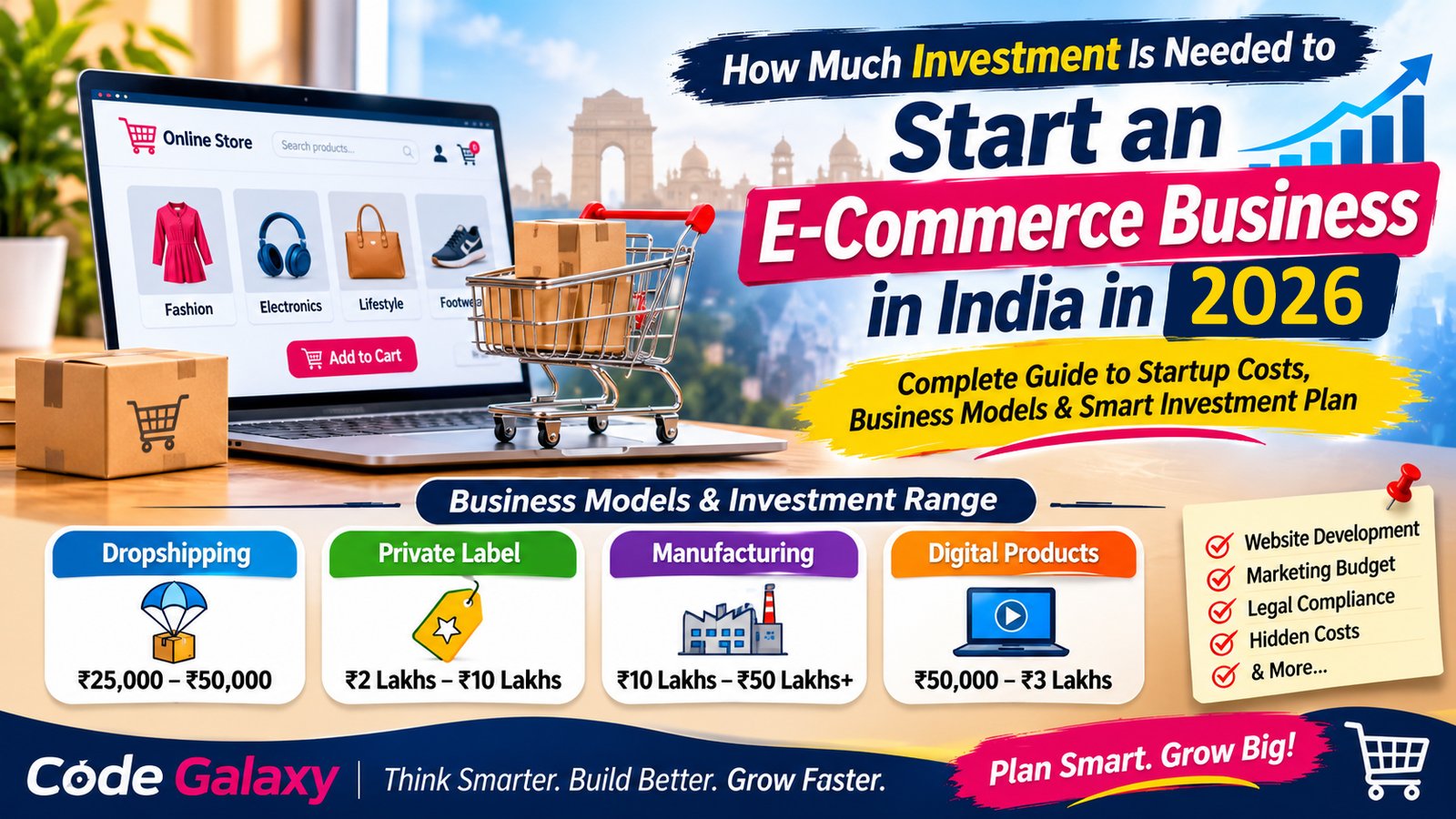
You can start a dropshipping business in India with an estimated initial investment of ₹25,000 to ₹50,000.
The primary expenses generally include:
-
Website Development: ₹10,000–₹30,000 for developing a professional online store.
-
Business Registration and GST Compliance: ₹5,000–₹10,000, depending on the applicable requirements.
-
Initial Marketing Budget: ₹10,000–₹20,000 for advertising and customer acquisition.
In addition to the initial investment, monthly operational expenses typically range from ₹3,000 to ₹8,000. These costs may include website hosting, premium applications, subscription-based tools and other essential services.
One of the biggest challenges in dropshipping is finding trustworthy suppliers who can consistently deliver quality products within the promised delivery timelines. Platforms such as AliExpress, IndiaMART and local wholesale suppliers can help entrepreneurs identify potential sourcing partners.
Depending on the product category, supplier pricing and operating expenses, dropshipping businesses may target profit margins of approximately 15%–30%.
2. Private Label Business Setup Expenses
Private labelling is a business model in which you work with manufacturers to produce goods that are sold under your own brand name. Unlike dropshipping, this approach gives you greater control over product presentation, branding, packaging and market positioning.
Starting a private label e-commerce business generally requires an investment of ₹2 lakh to ₹10 lakh, depending on the product category, manufacturing requirements and quality standards.
The major investment components include:
-
Product Development and Sampling: ₹30,000–₹1,00,000 for product research, sample preparation and initial testing.
-
Initial Inventory Purchase: ₹1,50,000–₹5,00,000 for purchasing products from manufacturers.
-
Brand Development and Packaging Design: ₹25,000–₹75,000 for creating a distinctive brand identity and packaging.
-
Quality Testing and Certifications: ₹15,000–₹50,000, depending on product requirements.
-
Website Development and Branding: ₹40,000–₹1,50,000 for establishing a professional online presence.
Private labelling can offer higher profit margins, potentially ranging from 40% to 60%, compared with the typical dropshipping model. However, achieving these margins depends on product costs, pricing, marketing expenses and customer demand.
Product categories such as cosmetics, supplements and home improvement products can offer opportunities for private label businesses in India. Proper market research, product quality assessment and supplier verification are essential before making a significant investment.
3. Manufacturing-Based E-Commerce Business Costs
Manufacturing your own products and selling them through an e-commerce platform provides greater control over production, product quality, pricing and brand development.
However, this business model requires a considerably higher initial investment. Depending on the type of products, production capacity and infrastructure requirements, the estimated investment can range from ₹10 lakh to ₹50 lakh or more.
The major investment areas include:
| Investment Area | Estimated Cost (₹) |
|---|---|
| Manufacturing Setup and Equipment | 5,00,000–25,00,000 |
| Raw Material Inventory | 2,00,000–8,00,000 |
| Factory Licences and Compliance | 50,000–2,00,000 |
| Initial Production Run | 1,50,000–5,00,000 |
| Quality Control Systems | 75,000–3,00,000 |
| E-Commerce Platform Setup | 1,00,000–5,00,000 |
This business model is particularly suitable for entrepreneurs with manufacturing experience, industry knowledge or access to production facilities.
One of its biggest advantages is the ability to maintain control over the entire product development process. Businesses can also build a distinctive brand identity and establish stronger product differentiation.
Depending on the industry, production efficiency and pricing strategy, some manufacturing businesses may achieve profit margins exceeding 70%. However, these returns are not guaranteed and must be evaluated against production costs, operational risks and market competition.
4. Digital Products and Services Investment
Digital products and services provide another attractive opportunity for entrepreneurs who want to establish an online business without managing physical inventory or traditional shipping operations.
This model includes selling online courses, software applications, digital templates, consulting services, subscription-based content and other downloadable products.
The initial investment generally ranges from ₹50,000 to ₹3 lakh, depending on the complexity of the product and the technology required to deliver it.
The primary investment areas include:
-
Content Creation and Course Development: ₹25,000–₹1,50,000 for preparing professional digital content, educational materials and online courses.
-
Professional Video and Audio Equipment: ₹30,000–₹80,000 for recording and producing high-quality digital content.
-
Learning Management System or Digital Platform: ₹15,000–₹50,000 annually for hosting, managing and delivering digital products.
-
Website Development and User Experience: ₹40,000–₹1,20,000 for creating a professional platform with user-friendly navigation and purchasing functionality.
-
Marketing and Customer Acquisition: ₹20,000–₹60,000 for promoting digital products and reaching potential customers.
Entrepreneurs offering digital services such as consulting, coaching, professional training or freelance solutions may require an even smaller initial investment, often around ₹15,000–₹40,000 for a professional website and initial marketing activities.
The biggest advantage of this model is scalability. Once a digital product has been developed, it can be sold repeatedly without the need for additional physical production or inventory purchases. This makes digital products an attractive option for entrepreneurs looking to build a scalable online business.
Platform Selection and E-Commerce Website Development Costs
Selecting the right e-commerce platform is another important decision when establishing an online business. Your platform determines how customers interact with your store, how products are managed and how efficiently you can handle orders, payments and business operations.
Depending on your budget and business requirements, you can choose between ready-made e-commerce platforms and custom website development solutions.
5. Ready-Made E-Commerce Platform Subscription Costs
Ready-made e-commerce platforms provide a convenient and cost-effective way to launch an online store without developing everything from scratch.
Popular platforms such as Shopify, WooCommerce, Wix and BigCommerce offer different pricing plans and features to support businesses of various sizes.
The estimated monthly subscription and platform-related costs generally range from ₹500 to ₹15,000, depending on the selected solution and additional services.
| Platform | Estimated Monthly Cost (INR) | Key Features |
|---|---|---|
| Shopify Basic | ₹2,000–₹2,500 | Product listings, payment gateway integration and basic analytics |
| WooCommerce | ₹500–₹3,000 | WordPress-based platform with extensive customisation options; hosting required |
| BigCommerce | ₹2,500–₹8,000 | Built-in e-commerce features and scalable store management |
| Magento Commerce | ₹15,000+ | Enterprise-level functionality and extensive customisation capabilities |
In addition to subscription fees, businesses may incur transaction charges, payment gateway fees and other platform-related expenses. Depending on the service provider and payment arrangement, transaction-related charges may range from 2% to 3% per sale.
Premium website themes may cost between ₹2,000 and ₹10,000, while essential applications and plugins can add another ₹1,000–₹5,000 to your monthly expenses.
The biggest advantage of ready-made platforms is their quick deployment. Entrepreneurs can establish an online store within a few days, depending on the product catalogue, design requirements and configuration.
These platforms also provide built-in features for security updates, hosting and basic maintenance, making them suitable for startups and businesses looking to test their products in the online marketplace without making a substantial initial investment.
6. Custom E-Commerce Website Development Investment
Custom e-commerce website development is an excellent option for businesses that require greater control over website design, functionality, user experience and business operations.
Unlike ready-made platforms, custom-developed websites can be designed around specific business requirements, allowing entrepreneurs to introduce specialised features and workflows as their businesses grow.
However, custom development generally involves higher initial costs and longer development timelines.
The estimated development costs are:
-
Basic Custom E-Commerce Website: ₹50,000–₹2,00,000 for a professionally designed online store with essential shopping and order management features.
-
Advanced E-Commerce Website: ₹2,00,000–₹8,00,000 for advanced functionality, integrations and customised business workflows.
-
Enterprise-Level E-Commerce Platform: ₹8,00,000–₹25,00,000+ for large-scale platforms with complex architecture, advanced integrations and extensive customisation.
Several factors influence the overall development cost:
-
UI/UX Design Complexity: Custom user interface and experience design may cost ₹30,000–₹1,50,000, depending on the design requirements.
-
Feature Requirements: Functionalities such as shopping carts, payment gateways, inventory management, order processing and customer dashboards influence development costs.
-
Third-Party Integrations: Connecting CRM systems, ERP software, accounting tools and external APIs may require additional development.
-
Developer Expertise: Freelance developers may charge approximately ₹500–₹2,000 per hour, while development agencies may charge ₹2,000–₹5,000 per hour.
Developing a comprehensive custom e-commerce platform can take approximately 3–6 months, depending on project complexity, functionality and integration requirements.
Businesses should also consider ongoing maintenance expenses, which may account for approximately 15%–20% of the initial development cost annually.
Although custom development requires a higher upfront investment, it provides greater flexibility, scalability and opportunities to create a distinctive online shopping experience.
7. Mobile App Development Expenses for E-Commerce Businesses
Mobile commerce has become an important part of the online shopping experience. Customers increasingly prefer browsing products, comparing prices and placing orders through smartphones.
For e-commerce businesses planning long-term growth, investing in a dedicated mobile application can improve customer engagement, simplify repeat purchases and strengthen brand visibility.
However, developing a high-quality mobile application requires additional investment, depending on the operating system, design requirements and features.
Estimated Native Mobile App Development Costs:
-
Android Application: ₹1,50,000–₹6,00,000.
-
iOS Application: ₹1,50,000–₹6,00,000.
-
Cross-Platform Mobile Application: ₹2,00,000–₹8,00,000.
Essential Features That Influence Development Costs
A professional e-commerce mobile application may include:
-
User registration, login and profile management.
-
Product catalogue with search and filtering options.
-
Shopping cart and wishlist functionality.
-
Multiple payment gateway integrations.
-
Push notifications for promotions and order updates.
-
Order tracking and purchase history.
-
Customer support and chat functionality.
-
Social media integration.
Additional Mobile App Maintenance and Operational Costs
Apart from initial development, businesses should plan for recurring expenses such as:
-
App Store Fees: Google Play registration (₹2,000 one-time) and Apple App Store membership (₹6,500 annually).
-
Application Maintenance: ₹20,000–₹50,000 per month.
-
Updates and New Features: ₹50,000–₹2,00,000 annually.
-
Marketing and User Acquisition: ₹10,000–₹1,00,000 per month.
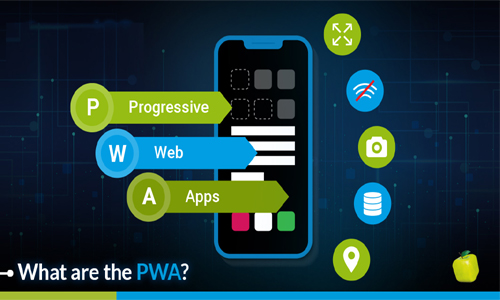
For startups working with limited budgets, Progressive Web Applications (PWAs) offer a practical alternative. A PWA provides an app-like experience through a web browser without requiring businesses to develop separate native applications initially.
The estimated development cost of a PWA ranges from ₹75,000 to ₹3,00,000.
This approach allows businesses to offer mobile-friendly shopping experiences while keeping initial development expenses under control. As the customer base expands and business requirements evolve, companies can consider investing in dedicated Android and iOS applications.
Ultimately, the right technology investment depends on your business objectives, available budget, customer expectations and long-term growth strategy.