How AI Is Changing Website Development & Digital Marketing in 2026
How AI Is Changing Website Development & Digital Marketing in 2026
Introduction
Artificial Intelligence (AI) is no longer a futuristic concept—it has become an essential part of modern business operations. From automating repetitive tasks to delivering personalized customer experiences, AI is transforming the way companies build websites, market their products, and engage with customers.
In 2026, businesses that embrace AI-driven technologies are gaining a competitive advantage through improved efficiency, better customer insights, and higher conversion rates. Whether you're a startup, SME, or enterprise, understanding how AI is reshaping website development and digital marketing is crucial for long-term success.
AI in Website Development
1. Faster Website Design and Development
AI-powered tools can now assist developers in creating website layouts, generating code snippets, and optimizing user interfaces. This significantly reduces development time while maintaining quality and performance.
Benefits include:
-
Faster project delivery
-
Reduced development costs
-
Improved design consistency
-
Better user experience
Developers can focus on strategic functionality and innovation while AI handles repetitive coding and design tasks.
2. Personalized User Experience
AI analyzes visitor behavior, preferences, and browsing patterns to create personalized experiences for every user.
Examples include:
-
Customized product recommendations
-
Dynamic content display
-
Personalized landing pages
-
Smart navigation suggestions
This level of personalization improves engagement and increases conversion rates.
3. Intelligent Chatbots and Virtual Assistants
AI-powered chatbots provide instant customer support 24/7. They can answer questions, guide users through websites, collect leads, and even assist with purchases.
Key advantages:
-
Reduced customer support workload
-
Faster response times
-
Improved customer satisfaction
-
Increased lead generation
4. Enhanced Website Performance
AI tools continuously monitor website performance and identify issues that could impact user experience.
AI helps with:
-
Page speed optimization
-
Error detection
-
Security monitoring
-
Predictive maintenance
This ensures websites remain fast, secure, and reliable.
5. Advanced Website Security
Cybersecurity threats are increasing every year. AI helps detect suspicious activities and potential security breaches before they cause damage.
AI-powered security solutions can:
-
Identify unusual traffic patterns
-
Prevent fraudulent activities
-
Detect malware attacks
-
Strengthen data protection
AI in Digital Marketing
1. Smarter SEO Strategies
Search Engine Optimization (SEO) has evolved significantly with AI. Modern AI tools help marketers analyze search trends, identify keywords, and optimize content more effectively.
AI can assist with:
-
Keyword research
-
Competitor analysis
-
Content optimization
-
Search intent analysis
-
Technical SEO audits
Businesses can make data-driven decisions and improve their search engine rankings faster than ever before.
2. AI-Powered Content Creation
Creating high-quality content consistently is one of the biggest challenges for marketers. AI tools help generate content ideas, outlines, drafts, and optimization suggestions.
Common applications include:
-
Blog writing assistance
-
Social media content generation
-
Email marketing campaigns
-
Product descriptions
-
Ad copy creation
While human creativity remains essential, AI significantly improves productivity.
3. Better Customer Targeting
AI analyzes large volumes of customer data to identify patterns and buying behaviors.
This enables businesses to:
-
Create targeted campaigns
-
Segment audiences accurately
-
Predict customer interests
-
Improve advertising ROI
As a result, marketing budgets are spent more efficiently.
4. Automated Marketing Campaigns
Marketing automation powered by AI allows businesses to nurture leads and engage customers without manual intervention.
Examples include:
-
Automated email sequences
-
Lead scoring
-
Customer journey automation
-
Remarketing campaigns
These automated processes save time while improving customer engagement.
5. Predictive Analytics
AI helps businesses predict future trends based on historical data and customer behavior.
Predictive analytics can help marketers:
-
Forecast sales
-
Identify high-value leads
-
Anticipate customer needs
-
Optimize marketing strategies
This allows companies to stay ahead of competitors and make proactive business decisions.
6. Social Media Optimization
AI tools help businesses manage and optimize their social media presence by analyzing audience engagement and content performance.
Benefits include:
-
Optimal posting schedules
-
Content recommendations
-
Performance tracking
-
Audience sentiment analysis
Businesses can maximize their social media impact with less effort.
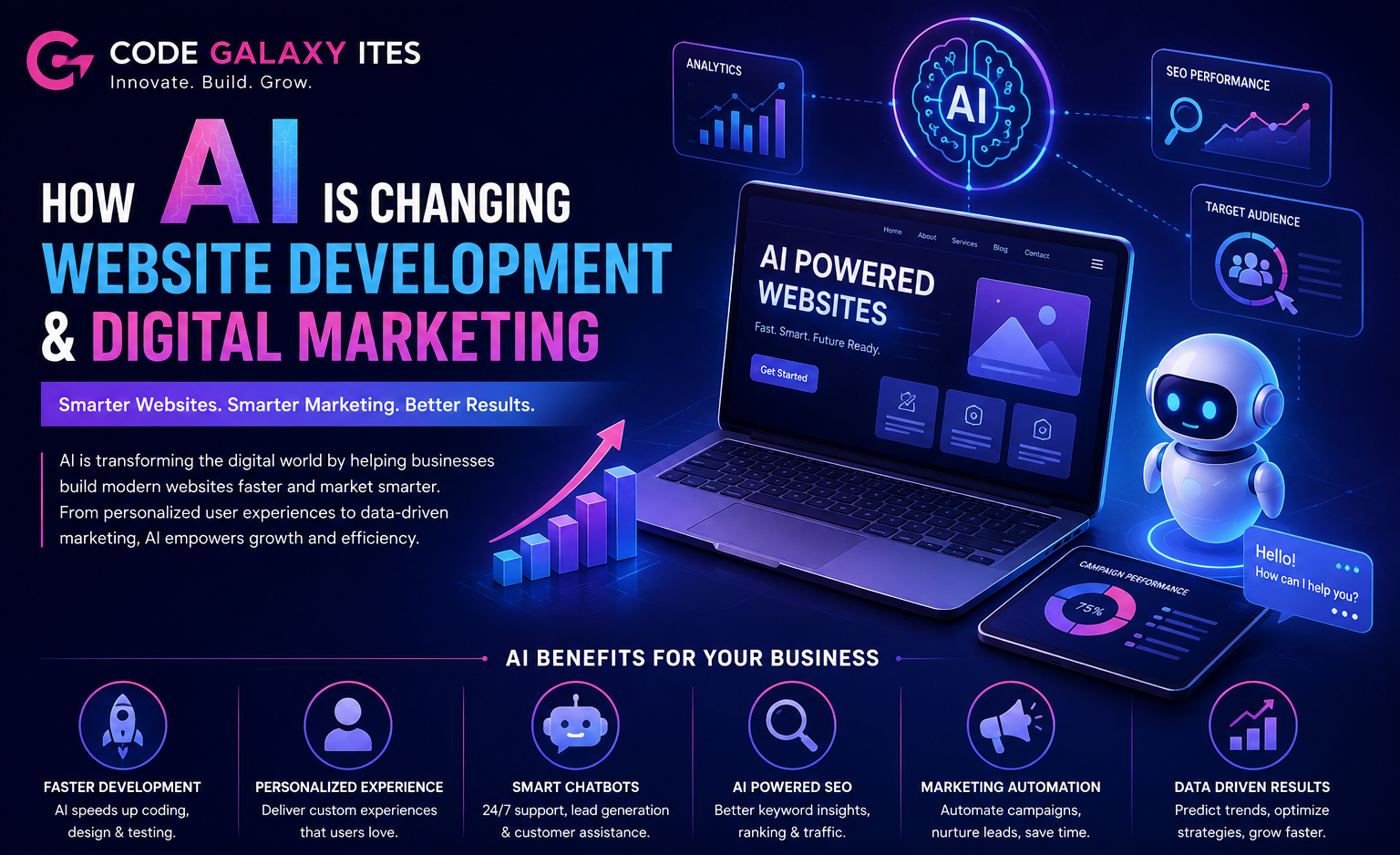
The Benefits of AI for Businesses
Organizations that adopt AI-powered website development and digital marketing solutions can achieve:
-
Increased operational efficiency
-
Improved customer experiences
-
Higher conversion rates
-
Better lead generation
-
Reduced marketing costs
-
Enhanced decision-making
-
Stronger competitive advantage
AI enables businesses to work smarter, respond faster, and scale more effectively.
The Future of AI in Web Development and Marketing
The role of AI will continue to expand in the coming years. We can expect advancements in:
-
Hyper-personalized customer experiences
-
Voice search optimization
-
AI-generated design systems
-
Predictive customer support
-
Advanced marketing automation
-
Real-time content personalization
Businesses that invest in AI today will be better positioned for future growth and innovation.
Conclusion
Artificial Intelligence is revolutionizing both website development and digital marketing. From personalized user experiences and intelligent chatbots to advanced SEO and predictive analytics, AI is helping businesses achieve better results while reducing manual effort.
As technology continues to evolve, integrating AI into your digital strategy is no longer optional—it's a necessity for staying competitive in today's digital landscape.