
Content Marketing: The Ultimate Strategy for Building Trust and Driving Business Growth
Content Marketing: The Ultimate Strategy for Building Trust and Driving Business Growth
Introduction
In today's digital world, consumers are constantly searching for information before making purchasing decisions. Traditional advertising alone is no longer enough to attract and retain customers. Businesses need to provide valuable information, answer customer questions, and establish themselves as trusted authorities in their industries. This is where content marketing plays a crucial role.
Content marketing has become one of the most effective digital marketing strategies for businesses of all sizes. By creating and sharing relevant, informative, and engaging content, organizations can attract potential customers, build trust, and generate sustainable growth.
What is Content Marketing?
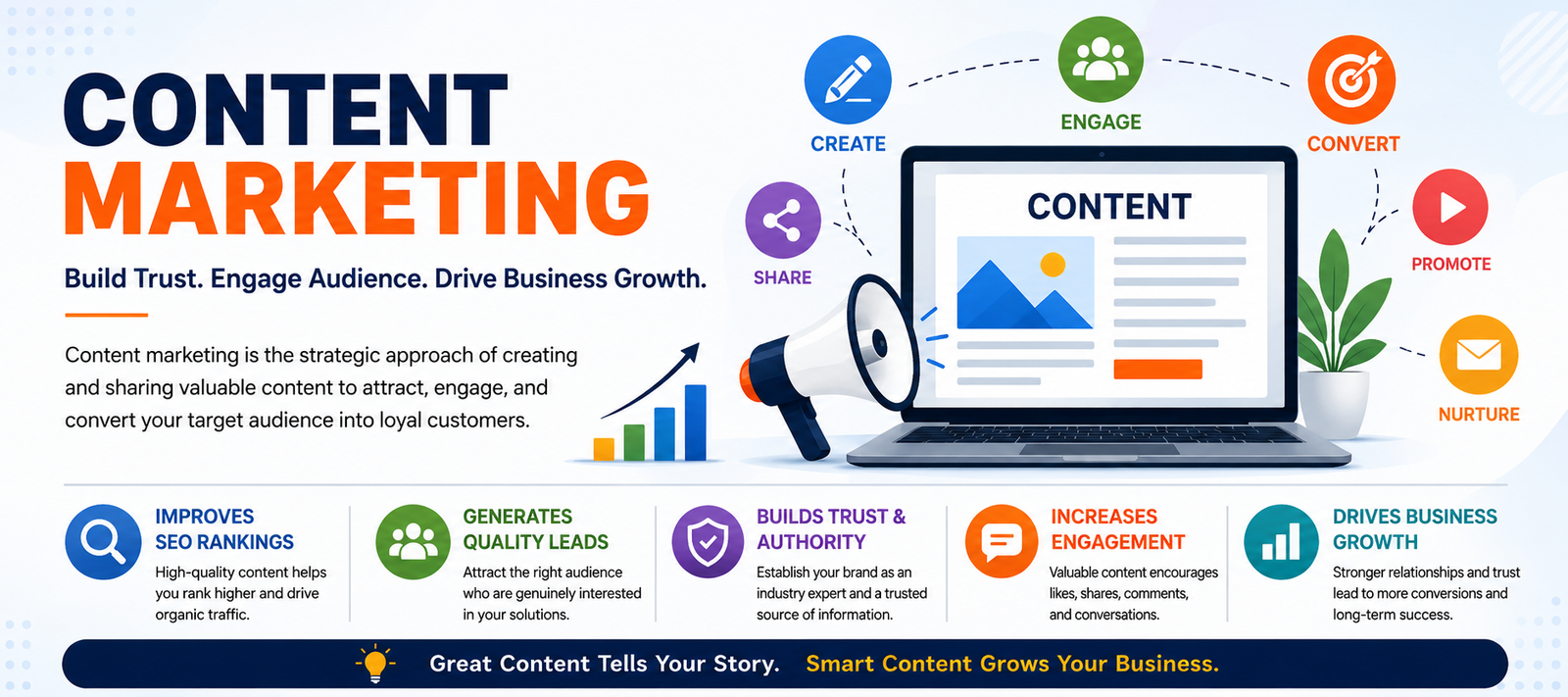
Content marketing is a strategic marketing approach focused on creating and distributing valuable, relevant, and consistent content to attract and engage a target audience. The primary goal is not direct selling but building relationships with potential customers by providing useful information that addresses their needs and challenges.
Content marketing can take many forms, including:
- Blog articles
- Social media posts
- Videos
- Infographics
- Case studies
- Whitepapers
- E-books
- Email newsletters
- Podcasts
- Webinars
By consistently delivering valuable content, businesses can position themselves as industry leaders and trusted sources of information.
Why Content Marketing is Important
1. Builds Brand Awareness
High-quality content helps businesses increase their online visibility and reach a wider audience. When users find useful information through blogs, videos, or social media content, they become familiar with the brand and are more likely to remember it when they need related products or services.
2. Generates Quality Leads
Content marketing attracts users who are actively searching for solutions. These visitors are often more qualified leads because they already have an interest in the topic, product, or service being discussed.
3. Improves Search Engine Rankings
Search engines reward websites that regularly publish valuable and relevant content. Well-optimized blog posts targeting specific keywords can improve search rankings, increase organic traffic, and help businesses reach potential customers without relying solely on paid advertising.
4. Establishes Authority and Trust
Customers prefer to buy from brands they trust. Educational content demonstrates expertise and helps businesses establish credibility within their industry. Over time, this trust translates into stronger customer relationships and increased sales.
5. Supports the Customer Journey
Content plays a vital role at every stage of the buyer's journey:
- Awareness Stage: Educational blogs and informational content
- Consideration Stage: Case studies, comparison guides, and webinars
- Decision Stage: Testimonials, product demonstrations, and success stories
Providing the right content at the right time helps move prospects closer to making a purchase decision.
Key Components of an Effective Content Marketing Strategy
Understand Your Target Audience
Successful content marketing begins with understanding your audience. Businesses should identify:
- Customer demographics
- Pain points
- Interests
- Buying behaviour
- Frequently asked questions
This information helps create content that resonates with potential customers and addresses their specific needs.
Develop a Content Plan
A content calendar ensures consistency and helps organize content creation efforts. Businesses should plan topics, publishing schedules, target keywords, and distribution channels in advance.
Focus on Quality Over Quantity
Publishing numerous low-quality articles can harm credibility. Instead, businesses should prioritize creating in-depth, well-researched, and actionable content that delivers genuine value to readers.
Optimize for SEO
Search Engine Optimization (SEO) enhances content visibility. Important SEO practices include:
- Keyword research
- Optimized titles and headings
- Internal linking
- Meta descriptions
- Mobile-friendly formatting
- Fast page loading speeds
SEO ensures content reaches the right audience through search engines.
Promote Content Effectively
Creating great content is only part of the process. Businesses should actively distribute content through:
- Social media platforms
- Email marketing campaigns
- Industry forums
- Online communities
- Content syndication channels
Promotion increases reach and maximizes content ROI.
Popular Types of Content Marketing
Blog Content
Blogs remain one of the most effective forms of content marketing. They help answer customer questions, improve SEO, and establish thought leadership.
Video Marketing
Video content is highly engaging and often generates better user interaction than text-based content. Tutorials, product demonstrations, and educational videos are particularly effective.
Social Media Content
Social media platforms allow businesses to engage directly with audiences and share content in a more interactive format.
Email Marketing
Email newsletters help nurture leads and maintain communication with existing customers by delivering personalized content directly to their inboxes.
Case Studies
Case studies showcase real-world results and demonstrate how products or services have helped customers solve specific problems.
Common Content Marketing Mistakes to Avoid
Many businesses struggle with content marketing because they:
- Focus too heavily on selling instead of providing value
- Publish content inconsistently
- Ignore SEO best practices
- Fail to understand their audience
- Neglect content promotion
- Do not track performance metrics
Avoiding these mistakes can significantly improve content marketing results.
Measuring Content Marketing Success
Businesses should regularly monitor key performance indicators (KPIs), including:
- Website traffic
- Organic search rankings
- Lead generation
- Social media engagement
- Conversion rates
- Time spent on page
- Email open and click-through rates
Analysing these metrics helps identify successful strategies and areas for improvement.
Future Trends in Content Marketing
As digital technology evolves, content marketing continues to change. Key trends shaping the future include:
- Artificial Intelligence-assisted content creation
- Personalized content experiences
- Voice search optimization
- Interactive content formats
- Video-first marketing strategies
- Data-driven content decisions
Businesses that adapt to these trends will be better positioned to engage modern consumers and maintain a competitive advantage.
Conclusion
Content marketing is no longer just a marketing option—it is a fundamental business strategy for attracting, engaging, and retaining customers. By creating valuable content that addresses audience needs, businesses can improve search visibility, build trust, generate qualified leads, and drive long-term growth.
A well-planned content marketing strategy delivers lasting results and helps organizations establish meaningful relationships with their customers. In an increasingly competitive digital landscape, businesses that invest in quality content will continue to outperform those that rely solely on traditional advertising methods.